Thursday, 18 May 2017

Comparing the effectiveness- School Education v/s Tuition classes


Comparing the effectiveness- School Education v/s Tuition classes


In India, there exists a system of ‘tuition classes’ parallel to the formal system of school education to supplement academic support.


Reasons for the burgeoning of tuition centers are:-
* Cut-throat competition born out of parental ambitions to see children in fields as medicine, engineering, civil services, management and accountancy. 
* Slow-learners or academically-weak students or those without motivation find no support in packed classrooms and teachers face the Damocles’ sword of “completing portions” hanging above their head.
* Brilliant students need further enhancement at specialized levels.
* The lengthy curriculum, existing communication gap between teachers and students, tuitions seen as a status symbol or even preference of some subjects over others.


 Nonetheless, it is not permissible to negate the importance of School Education which lies in the fact that the children of today will become adult citizens & productive members of society tomorrow. School is the training ground for all virtues & guides children to the right path.  


The chief objective of the authority is to stimulate interest and curiosity in the students. Moreover, Education should prepare young people for life, work & citizenship. 

But, it is also required to examine the effects of overburdening the students with tedious pressure of school, tuitions and peers. Along with this, even the school management is stressed and facing problem of creating interest in students. 


Resulting in children becoming disillusioned with school and lose motivation as they have to also give attention in tuition classes. We also have to consider the situation of parents who are overburdened by paying fee at school & tuitions as well. 

So, amongst all the stakeholders for students- school management, tuitions & parents. Who is at the winning edge?  


Friday, 5 May 2017

Employability Skills - Skills You Need for a Job

             
   Employability Skills - Skills You Need for a Job


Employability skills or ‘soft skills’ are “a set of achievements, understandings and personal attributes that makes individuals more likely to gain employment and to be successful in their chosen occupations".
Although, these skills are foundation of one’s career but are frequently referenced as lacking in school- leavers, graduates or those already in employment.  
These most essential skills are required to make an individual not only employable but also develop as Successful Professionals as mentioned below:


Interpersonal Skills
These are vital when seeking employment as we use them to interact with other people and may be the single most important factor for many recruiters.
Good interpersonal skills allow you to participate effectively as a member of a team, satisfy customers and clients' expectations, negotiate, make decisions, manage your time efficiently, take responsibility and work effectively with other employees.


Communication Skills
The ability to communicate both verbally and in writing with a wide variety of people, maintain good eye contact, write clearly and succinctly, demonstrate a varied vocabulary and tailor your language to your audience are all essential skills that employers seek out.  
Similarly, active listening skills involve not only hearing but gaining and understanding information. Listening is a basic requirement leading to fewer mistakes and a greater understanding of the needs of employer and client.


Critical and Creative Thinking Skills
These require gathering reliable information, evaluating the same for a variety of solutions and selecting the most appropriate option based on the criteria and situation. 


Creative thinkers are innovative and inventive and are more likely to devise new ways of doing things that add value to the work environment, making systems and procedures more efficient.  Creative thinkers can offer new perspectives about the job and the company.


Personal Development
Personal development is all about having the right attitude towards work and the organization you work for.  
The employee who is open to learning and embraces change will be more successful than the person who is afraid of learning and resistant to changes in the organization.  Most jobs involve change in roles and responsibilities and under such circumstances; employers want people who are adaptable, flexible, and patient respond well to change.  
Self-motivation and confidence are key areas of personal development as is personal appearance and how others perceive you. Self-management skills, also known as ‘self-control’, are the skills we use to manage our personal feelings and how we react to challenges and problems both at work and in our private lives.  Personal development includes learning to avoid potentially negative emotions such as anger and stress while developing assertiveness and effective negotiation skills.


Presentation Skills
Presenting information clearly and effectively is a key skill in the work place and presentation skills are required in almost every modern employment area.
Presenting information does not just include making formal presentations - information could be presented in the form of notes, reports, research findings, business plans, scenario planning, risk assessments and strategic documents. You may well be asked to give a presentation as part of your initial interview.


Leadership
Leaders either have, or are perceived to have, strong self-confidence. Leaders are team players, allowing them to work in a group to achieve the best results for their employer. Leaders show social skills by respecting the thoughts, opinions and ideas of others - they gain the respect of others and aim for credibility.
Developing your leadership skills can therefore not only help you to find a senior position, but may also help you to gain promotion with your current employer.


Numeracy (Number Skills)
Numeracy skills are very important, irrespective of whether you consider a job to be "working with numbers". Having competence and being confident in working with numbers is a skill that can be used to your advantage in a wide range of employment settings: for example, knowing how profitable a company, understands value for money when purchasing and ordering supplies, following a budget. Being able to understand and analyze data in different formats is considered an essential skill in many organizations.


Digital Skills
Most people need some IT skills to find work today. Acquiring basic IT skills and being familiar with using a computer may open up a wide range of employment opportunities and increase marketability in the workplace.


Tuesday, 14 March 2017

Break The Chains: International Women’s Day with NXT Gen


         Break The Chains: International Women’s Day with NXT Gen


Celebrating Women's Day is an opportunity to appreciate the remarkable contribution of women to our society. This day is to honor the life, grit and determination of women.


International Women's Day (IWD), originally called International Working Women's Day, is celebrated on March 8 every year. It is also known as the United Nations (UN) Day for Women's Rights and International Peace. The day also marks a call to action for accelerating gender parity.


An event was conducted to celebrate this remarkable occasion with a group of girls of comparatively less privileged section of the society at one of the most picturesque location of The City Beautiful, Sukhna Lake.


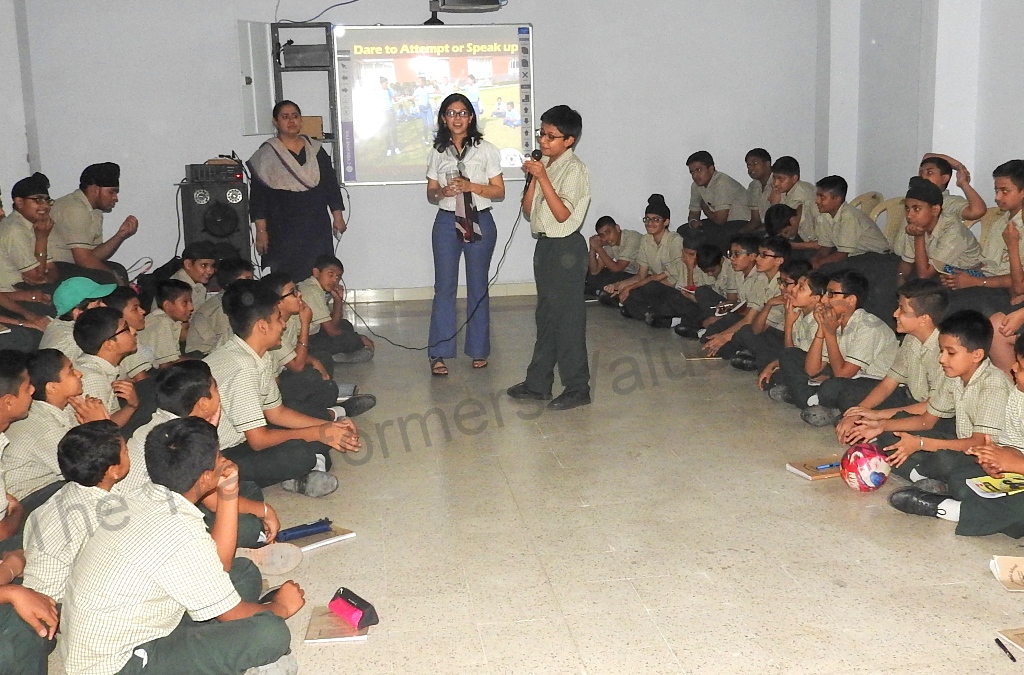
They were involved in different simulative activities so as to provoke maximum self introspection, invoking self confidence and help them connect with each other on the level of critical and logical thinking, communicate their views and break through the barriers of inhibition by performing some real daring activities in the public.


The day was blossomed in the spirit of womanhood and these young women appreciated their persona as an individual identity.


The most acknowledgeable part of this event was that it was facilitated by young women from the elite group, who strongly felt that for real Progress and Upliftment, we need to Empower Women from all facets of the society.


Monday, 13 March 2017

Key to Professionalism - Practice what you Preach : A learning experience from Secretariat Officials of Central Tibetan Public Administration


Key to Professionalism - Practice what you Preach : A learning experience from Secretariat Officials of Central Tibetan Public Administration

Most people try to prevent any gaps in their behavior and beliefs. So if they can’t change their behavior, they sacrifice their beliefs.

Hence, even if you are a school student, an ambitious youngster, an experienced professional, a house maker or a retired citizen. Regardless of your age, role and objectives in life; here is a take away to practice which is indeed going to help you in all walks.

 We here wish to disclose the learnings from a session conducted by our team for Secretariat Officials of Central Tibetan Public Administration. They bring forth remarkable learning for the people from across the borders.
Herein lies the attraction, they 'practice what they preach’. The major value of the 'preaching' being compassionate for all living beings. They have been successful to strengthen their relationships in professional and personal lives.


The key life skills they practice and preach are -
* renunciation
* patience, tolerance, forbearance, acceptance, endurance
* truthfulness, honesty
* determination, resolution
* loving-kindness
* equanimity, serenity
* meditation
* generosity, giving of oneself
* virtue, morality, discipline, proper conduct
* one-pointed concentration, wisdom, insight 


 Through these skills, they have been able to accomplish how to -
* Deal with conflicts, authorities, stress, emotions, cultural and religious disharmony
* Develop cross-cultural relations and friendships across societies and countries
* Resist pressure, clarification of values and customs and negotiations
* Cope with disappointment
* Social adapt and respect
* Attain self-esteem, tolerance, trust, sharing and compassion
* Plan ahead, to be assertive and empathetic

In all, it was a great take away for us as well.


Saturday, 11 March 2017

Need of Soft Skills for Teachers

                           
                                                    Need of Soft Skills for Teachers


Some specific areas of soft skills and why they are important for teachers besides being able to teach the students well as discussed below-

Communication Skills: It is important that the teachers become assertive and are able to exchange feedback with all the different guardians and parents of the students. It is also important that the teachers consult with previous teachers of the students to find out the learning’ needs of individual students and how to help them make progress.

  Critical Thinking and Problem-Solving Skills: Teachers must be able to deal with unwanted problems that are not related to classrooms but can affect the learning outcome of the students. The ability to identify and analyze problems in difficult situation and to make justifiable is a skill which can come handy.
       Cultural Intelligence: When it comes to teaching at schools using the curricula of different cultures and societies it is important that they can help the learners understand the subject matter in their local context. Moreover, the student groups may represent pupils from different socioeconomic and ethnic backgrounds, who can understand the lessons better if they are taught by educators having cultural intelligence.

Team Work: There are lots of competitions in many countries' education system in
terms of the exams of the students where the students go through tough competitions. It is important that the teachers teach the students to build teams and solve problems collaboratively. If they are good team-players then they can induce the same type of skills and attitude among the learners. Furthermore, if the teachers and the parents/guardians can practice a good team-work then the child's creative potential and the academic performance will foster.

 Social Media and Networking: Long gone are the times when we used to wonder
which version of Microsoft Excel would be better to analyze the results of the learners. It is now the time to find out how computers and smart phones (and hence social media) can help us to connect with other educators and compare our teaching practices to help us perform better in the classroom.


How do these skills help teachers?
          * Helps them make their classes more interesting
          * To serve as an example for the students
          * To interact with students at their own level
          * Enables them to be good leaders
          * Makes them much more approachable
          * Allows them to be sensitive to the needs of the children


Sunday, 26 February 2017

Need of Life Skills for Teachers

     
                                       Need of Life Skills for Teachers


To live to the challenge of globalization which is in line with the era of information economy, the strength of a nation is strongly dependent on the ability of its citizen to be highly intellectual and skillful. Thus, institution of higher learning plays a very important role to produce a human capital that is highly knowledgeable and skillful to meet the demand and expectations of many people. The teaching and learning processes in institutions of higher learning should be capable to provide such knowledge and skills to future graduates.


Teachers play a pivotal role in developing the future generations.Therefore they have to be properly guided to enhance their competencies.
Teacher’s education includes -


Teaching skills which would entail giving practice and training in various approaches, strategies     and techniques that would assist the teachers to impart and plan instruction, give suitable reinforcement and carry out effective and efficient assessment. It encompasses effective skills for   managing the class, use and preparation of instruction materials and skills. 


Pedagogical theory encompasses the sociological, psychological and philosophical aspect that would allow the teachers to possess a strong basis for practicing the skills needed to teach in the classroom. 


Professional skills encompass the strategies, Approaches and techniques that would assist teachers to develop their career and career growth. It encompasses counseling skills, soft skills, computer skills, information retrieving & management skills, interpersonal skills and life-long learning skills. 


Combination of pedagogical theory, teaching skills and professional skills would serve to develop the right attitude, skills and knowledge in teachers to promote holistic development. Thus, effectiveness and importance of teacher training programs is to elevate and improve teacher’s professional abilities in teaching.

Saturday, 25 February 2017

LIFE SKILLS FOR ALL

                                                           
                                                        LIFE SKILLS FOR ALL


Life skill is something which is necessary or desirable for full participation in everyday life.
It includes creativity, critical thinking, problem-solving and decision-making, the ability to communicate and collaborate, along with personal and social responsibility that contributes to good citizenship. Perhaps the most important life skill is the ability and willingness to learn.


 Life Skills for a developing and progressive country


Democracies need active, informed and responsible citizens, who are willing and able to take responsibility for themselves and their communities and contribute to the political process.
These capacities do not develop unaided; they have to be learnt. While certain life skills may be acquired through our everyday experience in the home or at work, they are not sufficient to adequately equip citizens for the active role required of them in today’s complex and diverse society.


By learning new skills we increase our understanding of the world around us and equip ourselves with the tools we need to live a more productive and fulfilling life, finding ways to cope with the challenges that life, inevitably, throws at us.

   Life skills for Children

"Education is about so much more than the topics pupils study in class; how they behave as individuals towards themselves and others are of equal importance in shaping the adults they will become."
Children don't naturally know how to make good choices. Life skills help children know what to do in everyday situations as well as how to make good decisions about more abstract, long-term choices e.g. good manners, tell the truth, show gratitude and advocate for themselves.


 Life skills for Adolescents

Adolescence, a vital stage of growth and development, marks the period of transition from childhood to adulthood. It is characterized by rapid physiological changes and psycho social maturation.


How well an adolescent deals with these issues is decided by a host of factors that include their personality, psycho social support from the environment (that includes parents, teachers and peers) and the life skills that they possess.e.g. critical thinking and creative thinking, decision making and problem solving, communication skills and interpersonal relations, coping with emotion, stress and self-awareness and empathy.


Life skills for Adults
In today’s world, we constantly rely on tools, electronics, and connected devices. Growing up in a world of ever-increasing connectivity is bound to require different skills than were needed before. On the other hand, young people do stand to lose some important skills if we let new technologies completely obscure our approach to life. By taking the best of older generations and combining it with today’s unique demands and skill sets, young adults stand to be more empowered than any generation before e.g. accepting feedback gracefully, apologizing sincerely, managing your time wisely and saying 'no' respectfully.


Life skills for Senior Citizens

With the growth of the aging population, the crucial step of incorporating wellness behavior changes into everyday life. The main purpose is to enhance older adults' independent living skills by increasing their ability to decipher the overwhelming body of wellness information and increasing their sense of control over their lives. The importance of lifelong mental activity and its positive role in successful aging can be understood as the preliminary data analysis suggests that interactive educational program for seniors can positively affect their sense of control and produce some immediate behavior changes that could enhance successful aging. 

It encourages older adults to try something new they learn in each lesson. The information is valuable for all older adults and appeals to lifelong learners who want to take an active role in life decisions e.g. be outgoing, explore your surroundings, be open-minded.


''Life Skills has greatly affected lives. They help to make better decisions in our everyday lives as well as in our working lives. We learn how to communicate in a more effective manner through life skills.”